
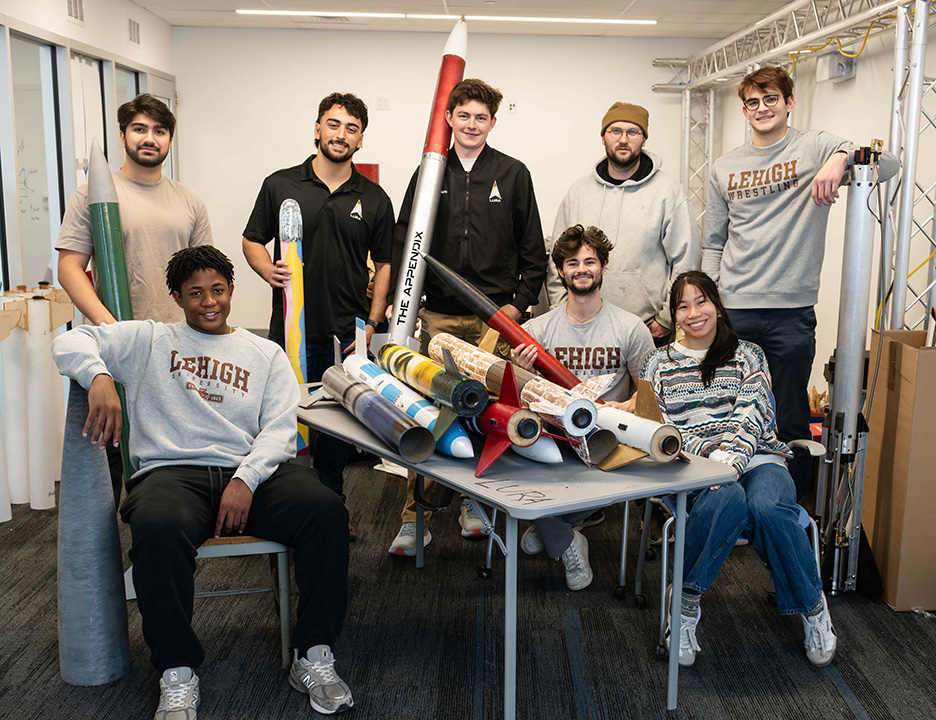
From early breakthroughs in flight design to the advanced mechanics of deep-space exploration, Lehigh University has consistently pushed the frontiers of aerospace engineering. This legacy is shaped by visionary faculty and determined students and alumni who have expanded the boundaries of the atmosphere. The timeline highlights key advances in fluid mechanics, materials science, and systems engineering that have supported NASA missions, transformed commercial aviation, and contributed to space exploration.
Explore the moments when Mountain Hawk ingenuity reached for the stars:
1962 — The Telstar Experiment
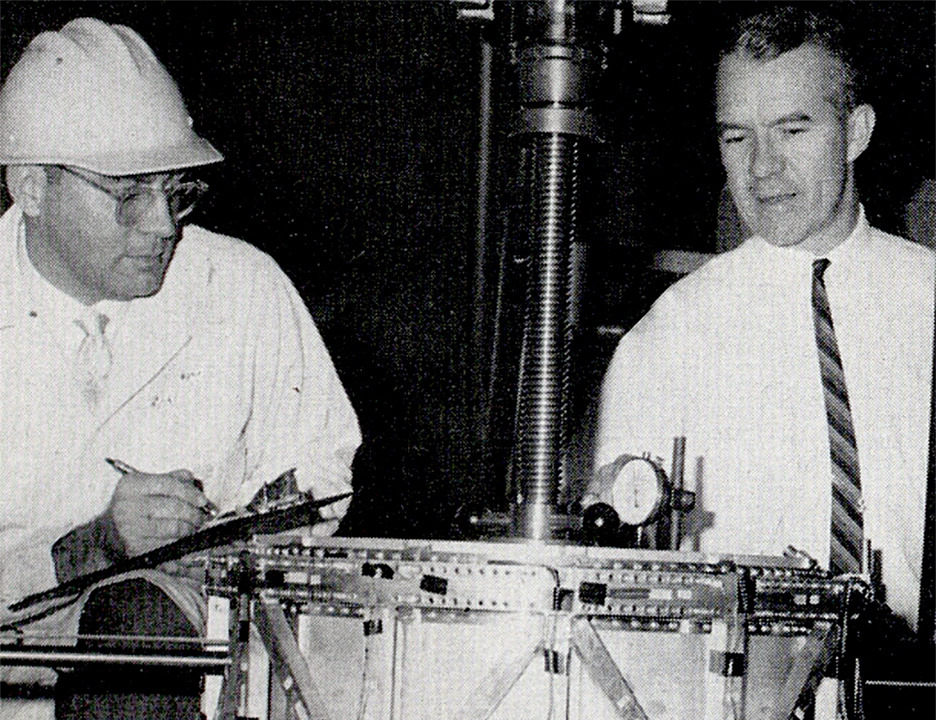
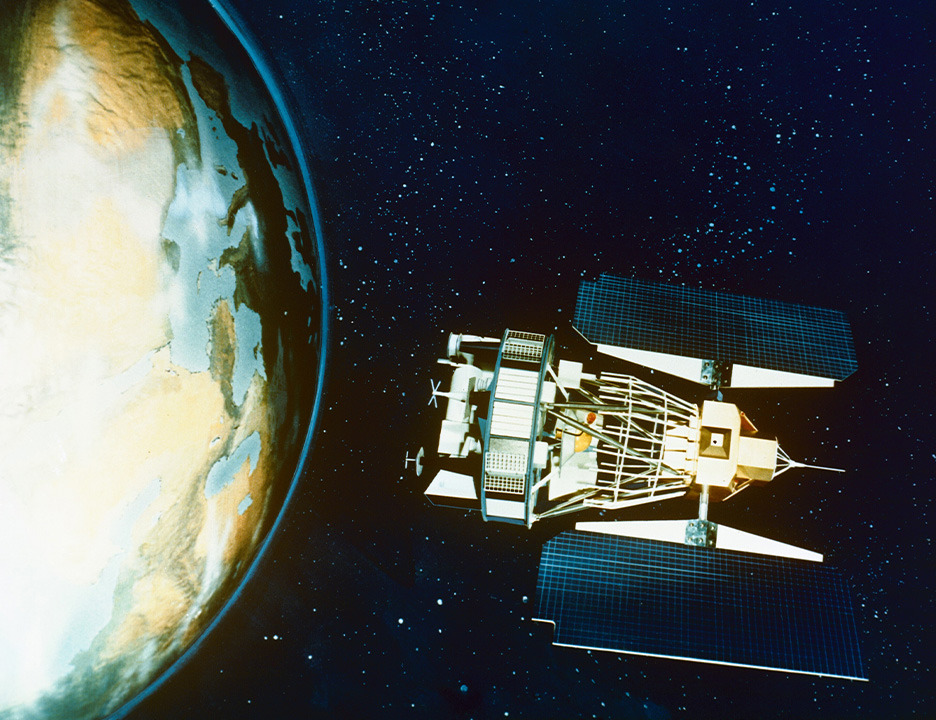
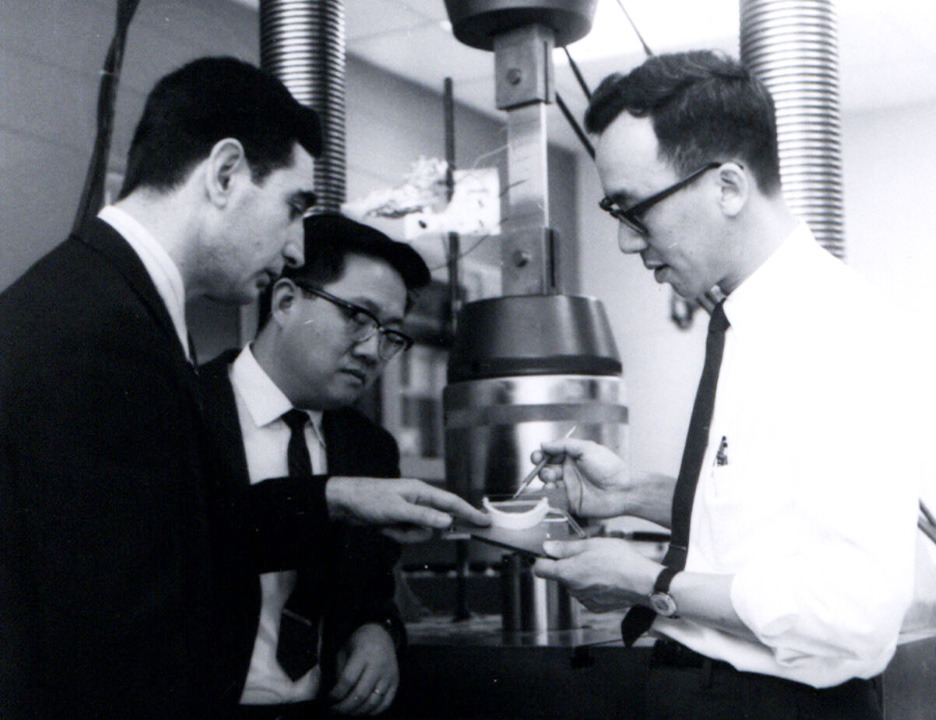
Fritz Engineering Laboratory conducts stress tests on the structural frame of AT&T's Telstar, the first U.S. communications satellite. Pictured: Roger Slutter (left), assistant engineer of tests, and Lynn S. Beedle, a legend in civil engineering research at Lehigh and director of Fritz Lab during the project.
1964 — Space Scientist at Helm
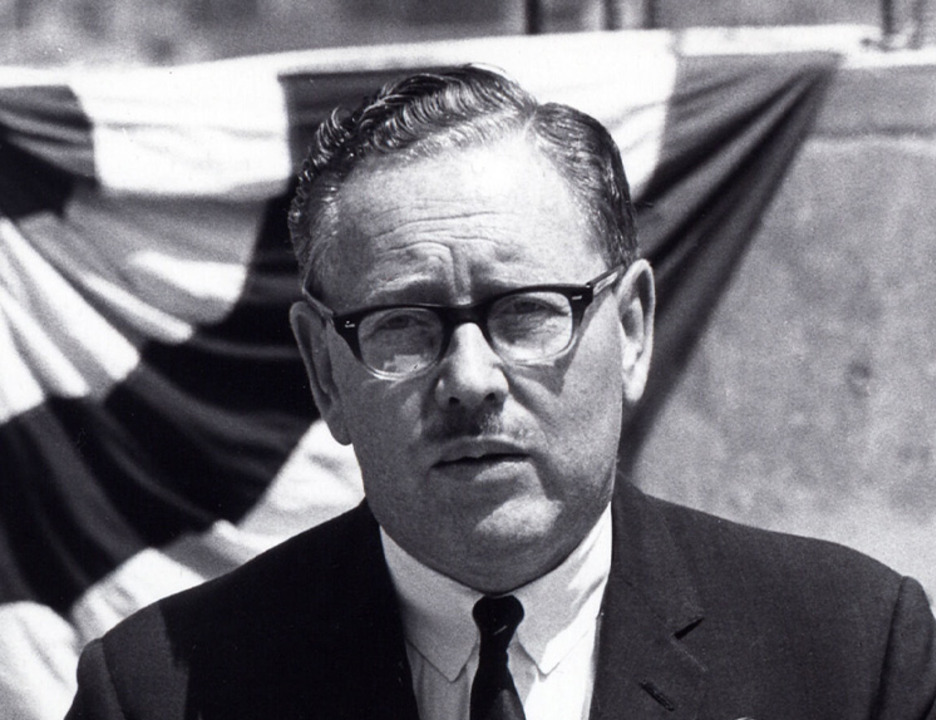
Space engineer W. Deming Lewis (pictured) is named Lehigh’s 10th president after a distinguished career with Bellcomm. William C. Hittinger '44 later leads Bellcomm during the Apollo project buildup.
1964 — The Early Space Race
Professor Ferdinand Beer (left) leads research on how wind forces affect rocket behavior and spacecraft structural integrity.
1965 — Training Space Travel's Future Makers
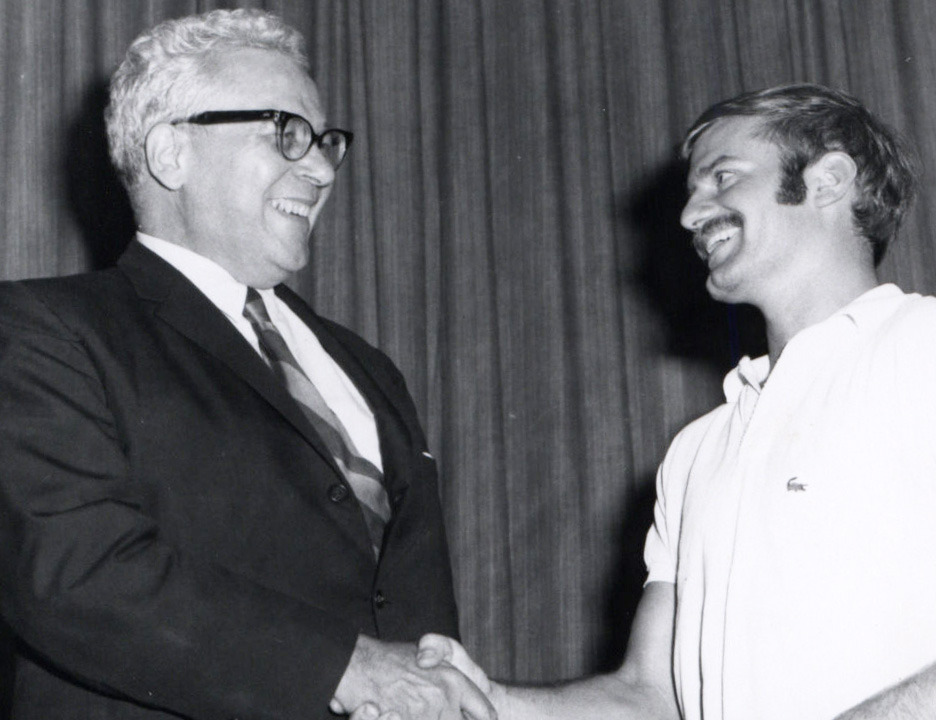
In a strategic move to bolster the nation's workforce during the height of the Space Race, NASA awards prestigious predoctoral fellowships to Lehigh. Professor Robert D. Stoudt, dean of Lehigh's Graduate School, notes that NASA identified a critical shortage of "specially trained space technologists" emerging naturally from traditional academic pipelines.
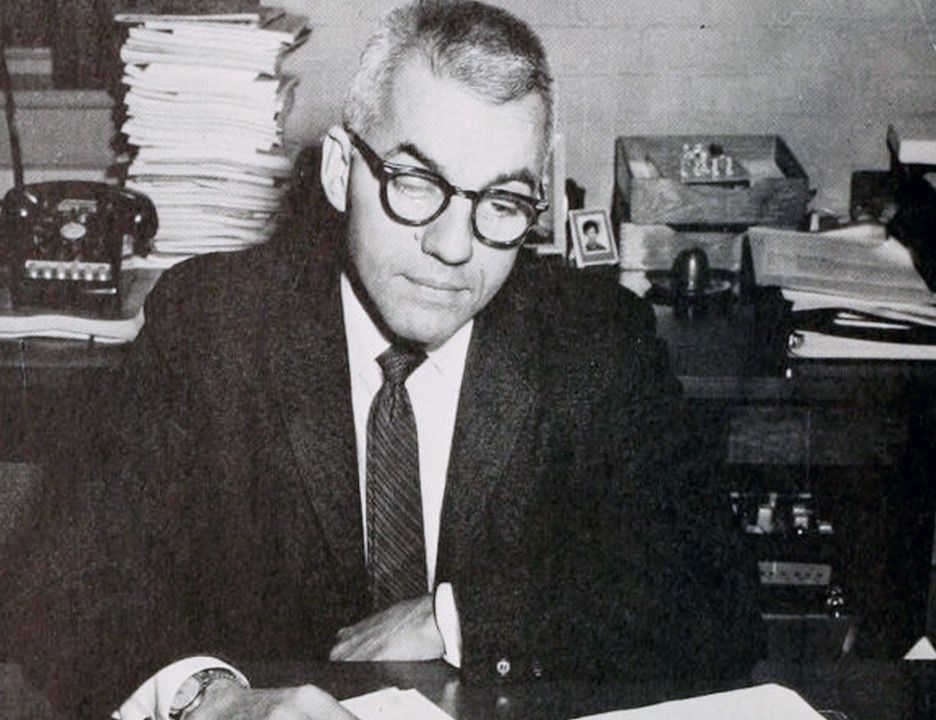
1967 — New Research Vistas
Lehigh secures a NASA grant to calculate structural stress on Apollo heat shields during atmospheric re-entry.
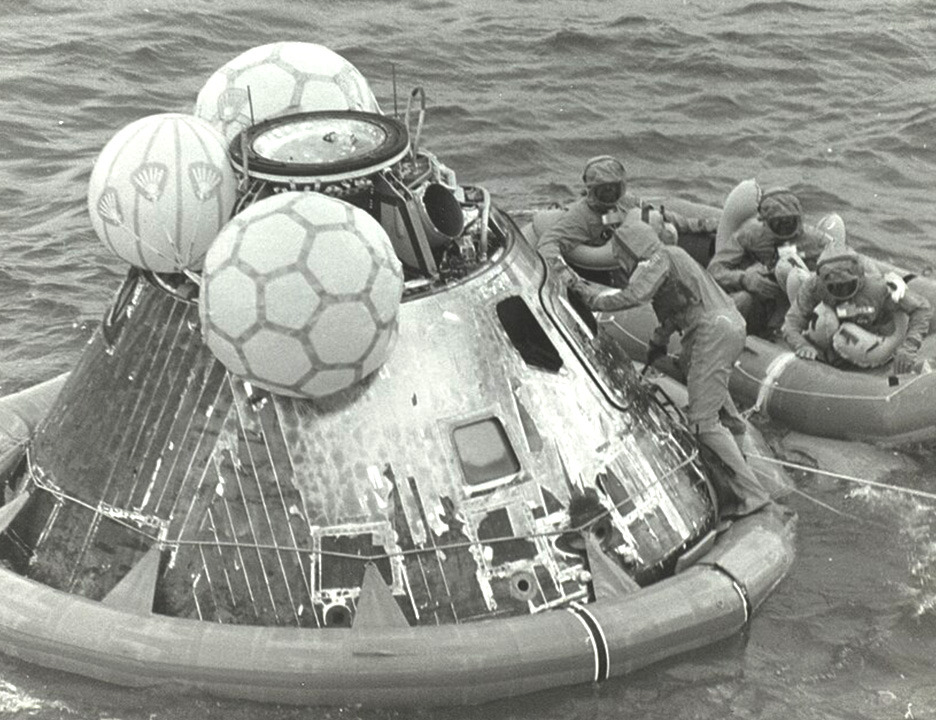
1969 — Tracking Apollo
As an Apollo 11 trajectory analyst, Bernie Schneider ’63 supplies data that aids TV tracking of the rocket in flight, allowing the world to follow the mission's progress.
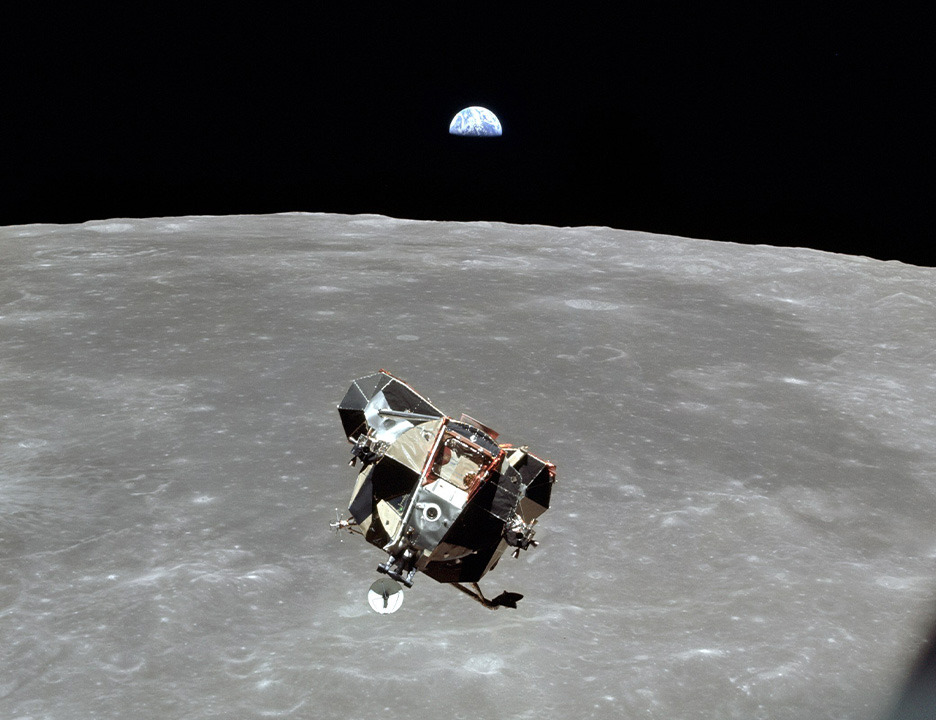
1970 — Analyzing Moon Samples
Professors Charles B. Sclar and Joseph I. Goldstein analyze lunar samples from Apollo 11 and 12, contributing to evidence that the moon’s craters were formed by meteor impacts rather than volcanic activity. A public viewing of lunar rocks draws 5,500 visitors, such as these students from St. Francis Academy, to campus for a glimpse of material from the Sea of Tranquility.
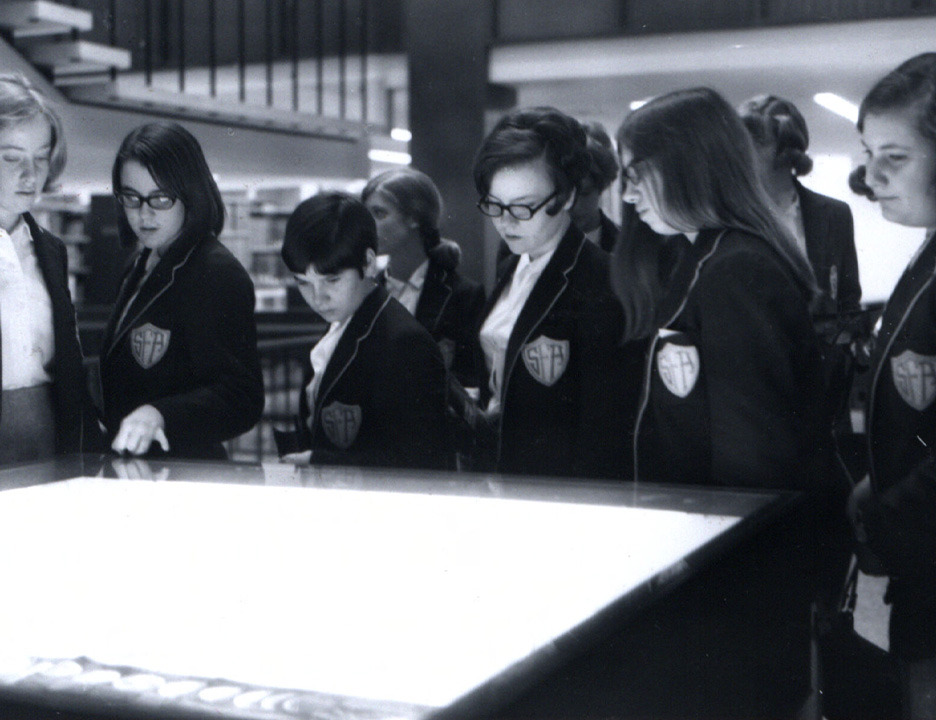
1972 — A Revolution in Earth Observation
Under Goddard Space Flight Center Director John F. Clark ’42, NASA launches Landsat 1, beginning more than 50 years of continuous space-based monitoring of Earth’s land and resources.
1975 — Predicting Material Failure
Under NASA sponsorship, Lehigh’s Institute of Fracture and Solid Mechanics—led by Professors Fazil Erdogan, George Sih, and Robert P. Wei—developed mathematical models for the Space Shuttle Thermal Protection System, ensuring brittle ceramic tiles stayed bonded to the flexible aluminum airframe under extreme thermal and structural stresses of spaceflight.
1978 — One Giant Step for Lehigh Engineering
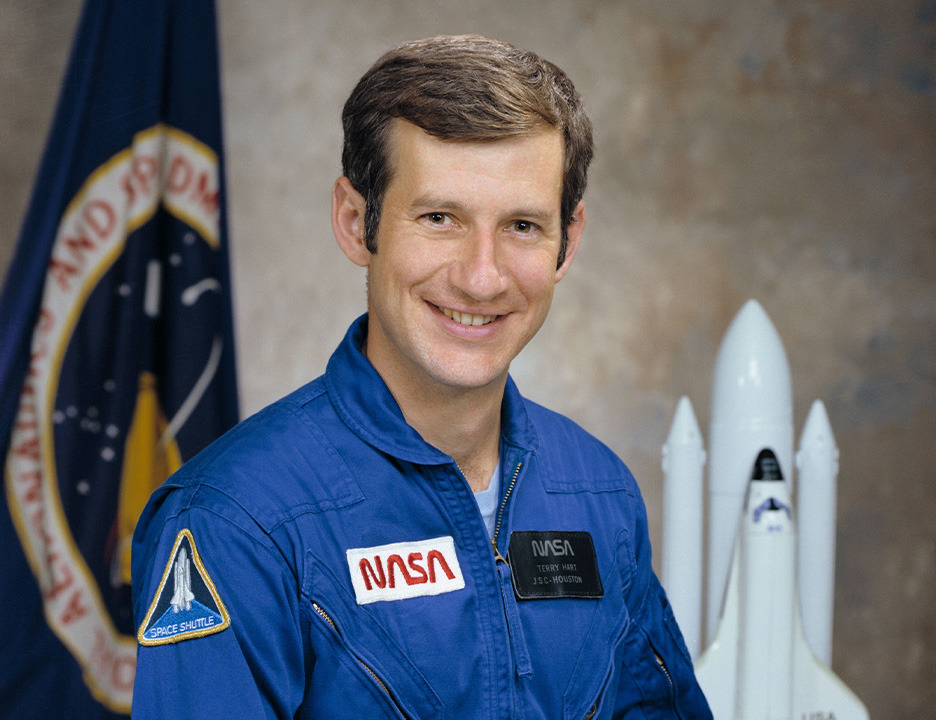
Terry Hart ’68 is selected in NASA’s “Group 8,” the first group chosen to support the upcoming Space Shuttle program.
1982 — Experiments in Space
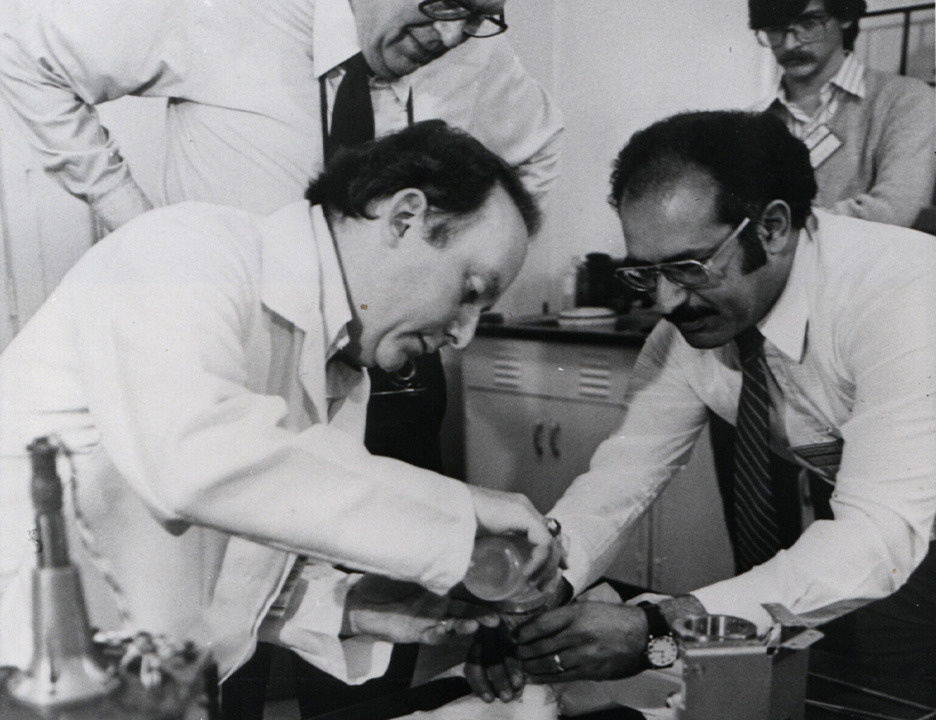
Professor Mohamed el-Aasser (front right) and collaborators prepare the first chemical reaction experiment in space for the Columbia Shuttle mission, producing perfectly spherical monodisperse polymer particles under microgravity—the first manufactured products from space.
1984 — The Dream is Alive
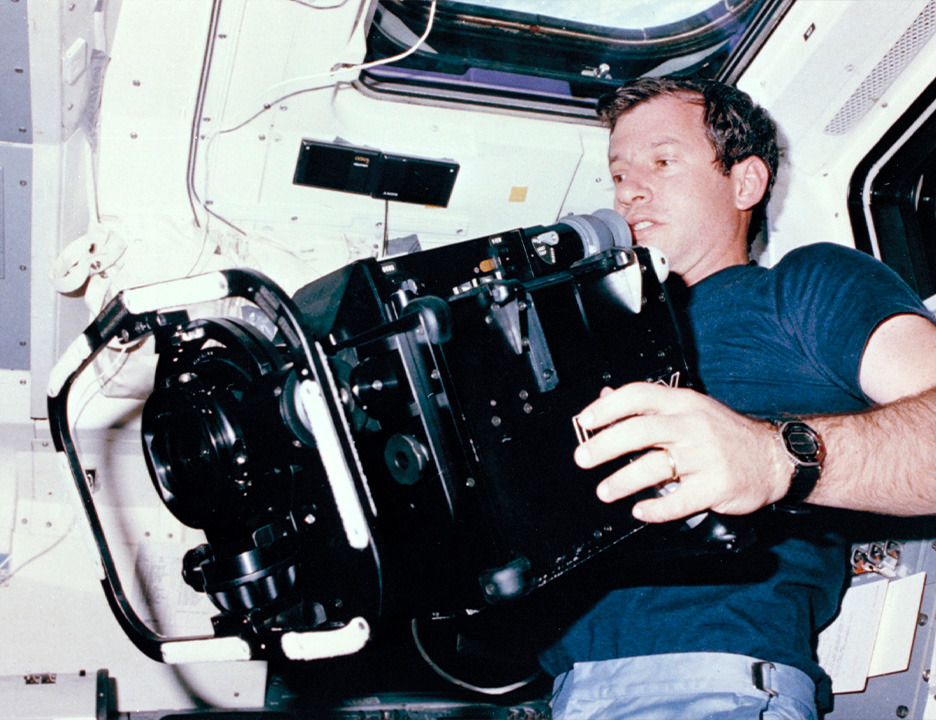
Terry Hart ’68 serves as cinematographer for the IMAX documentary "The Dream Is Alive" aboard Challenger, using an improvised in-space “dark room,” and operates the shuttle’s robotic arm to capture the Solar Max satellite for repair.
1986 — Mapping Galactic Flow
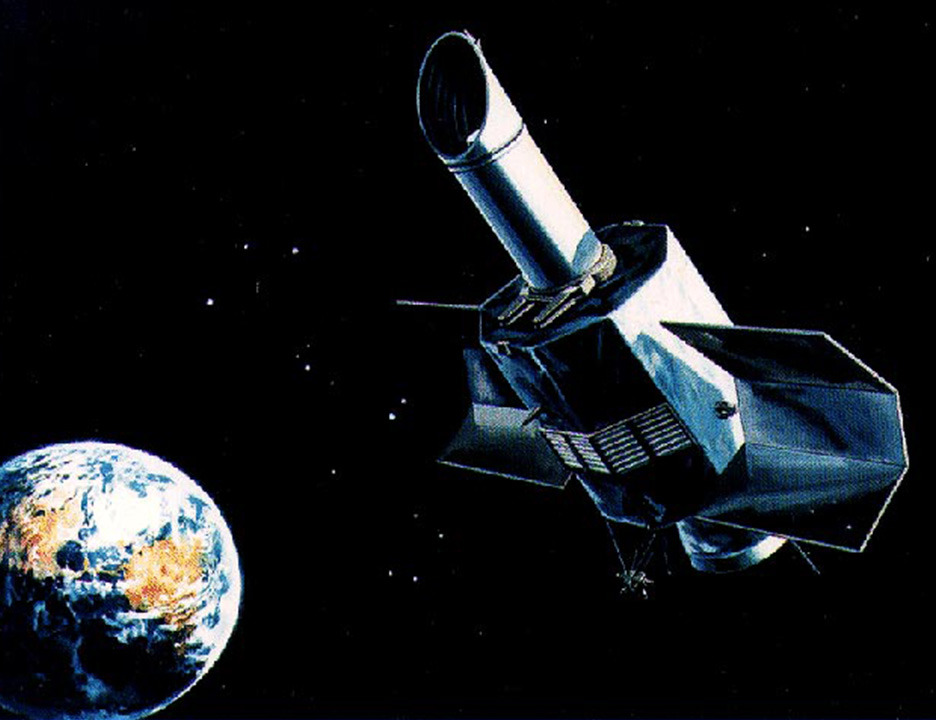
Professor George E. McCluskey Jr. uses NASA’s International Ultraviolet Explorer satellite to study V Sagittae, a nova-like binary star system. His ultraviolet observations reveal irregular gas flows consistent with one star accreting material from its companion, contributing to understanding of stellar evolution.
1987 — Leadership in International Collaboration
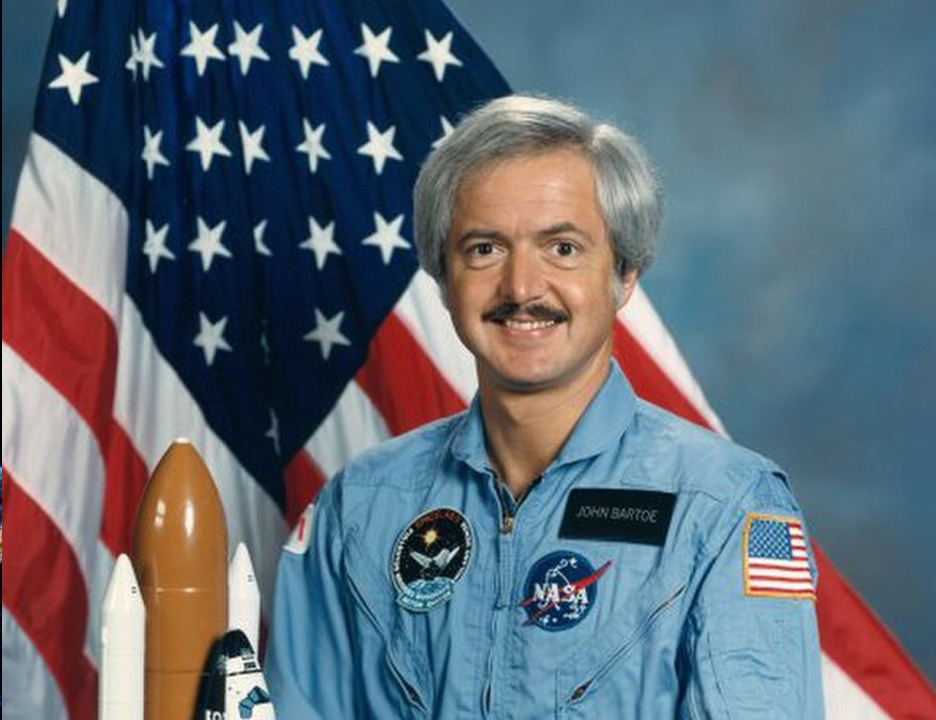
John-David Bartoe ’66, who flies on Challenger mission STS-51-F as a payload specialist, is named NASA Chief Scientist and helps define the scientific objectives for Space Station Freedom, the program that evolves into the International Space Station.
1990 — Launching the Space Grant Era
Lehigh joins the Pennsylvania Space Grant Consortium, a NASA-funded partnership that provides fellowships and research support for students pursuing aerospace-related study and research.
1992 — Detecting Signals in the Void
Professor Rick Blum published a landmark paper in IEEE Transactions on Information Theory titled "Optimum distributed detection of weak signals in dependent sensors." This research addressed a critical challenge for NASA and the aerospace industry: how to accurately detect faint signals in noisy environments using a network of sensors.
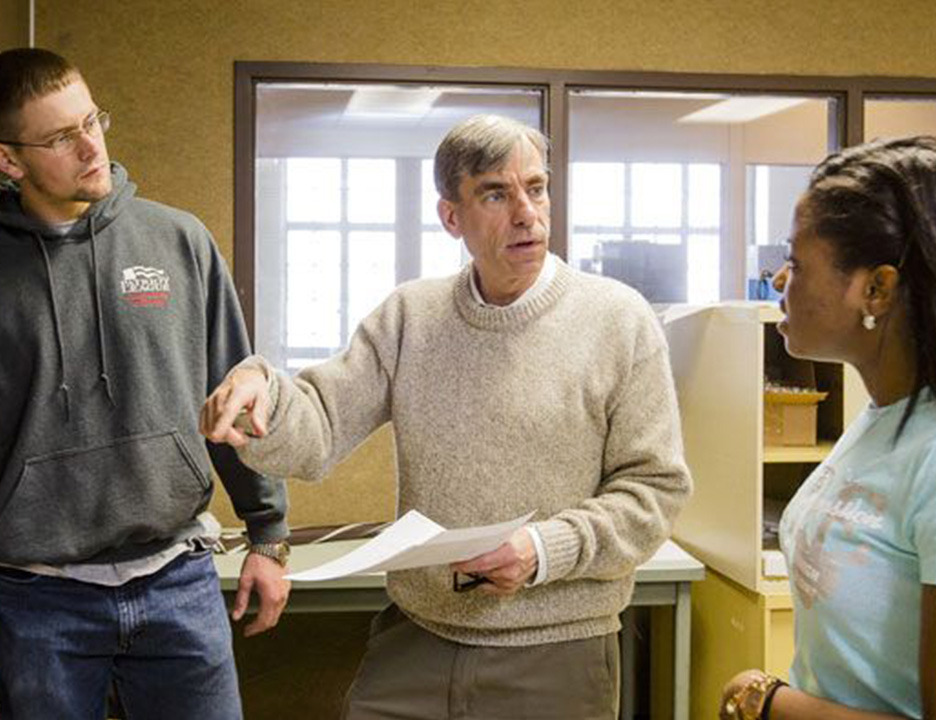
1994 — ‘Live’ from Lehigh
Lehigh begins broadcasting courses via the Telstar 401 satellite over the Lehigh Educational Satellite Network (LESN). Terry Hart ’68 directs engineering and operations for the Telstar fleet at AT&T Bell Labs, enabling the satellite infrastructure that carries major U.S. television network programming.
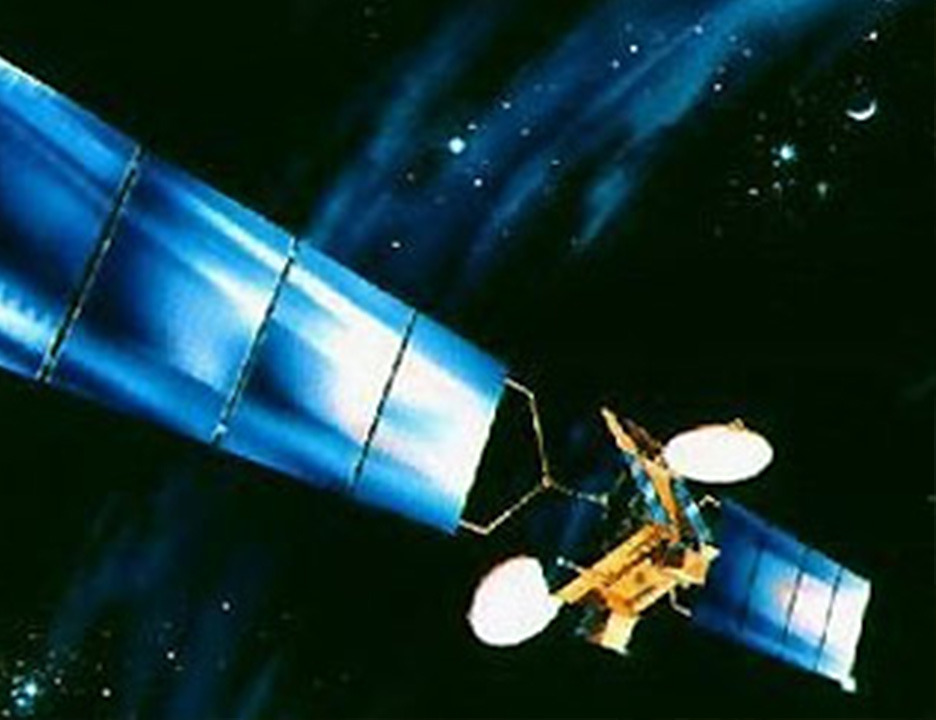
1996 — Advancing Innovation
Professor Herman Nied receives a NASA Certificate of Recognition for developing specialized finite element software supporting the design of durable, lightweight composite structures for aerospace applications.
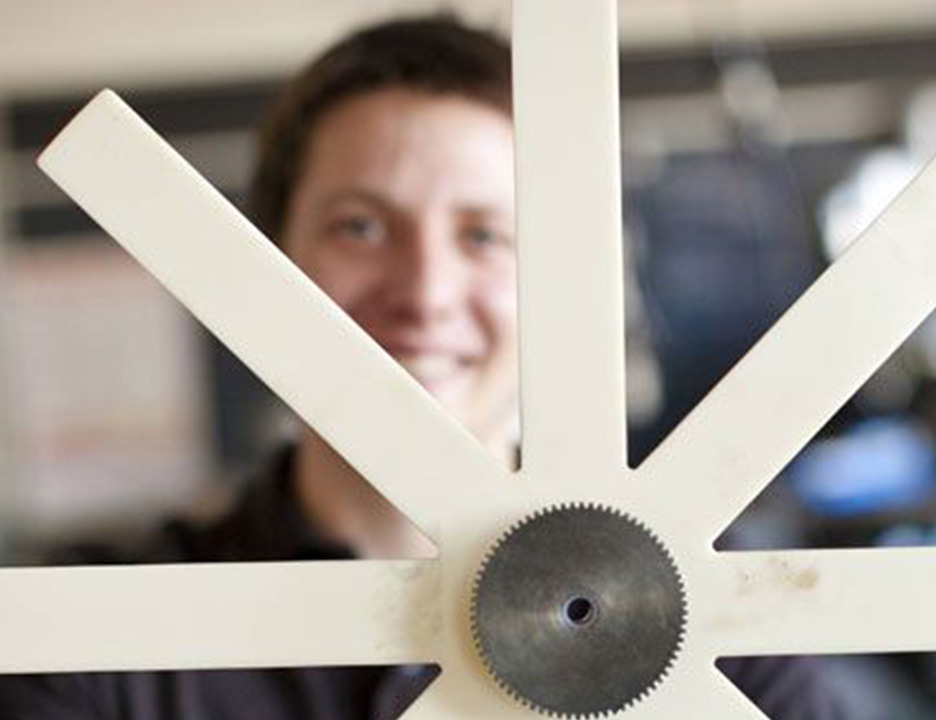
2004 — NASA’s Return to Flight
Professor Arnold Marder serves as a visiting scientist at NASA’s John F. Kennedy Space Center and works with agency engineers on the Return to Flight program following the Columbia disaster. He brings shuttle debris analysis into his Lehigh failure analysis course, where students investigate structural failures and contribute to understanding how the shuttle broke apart.
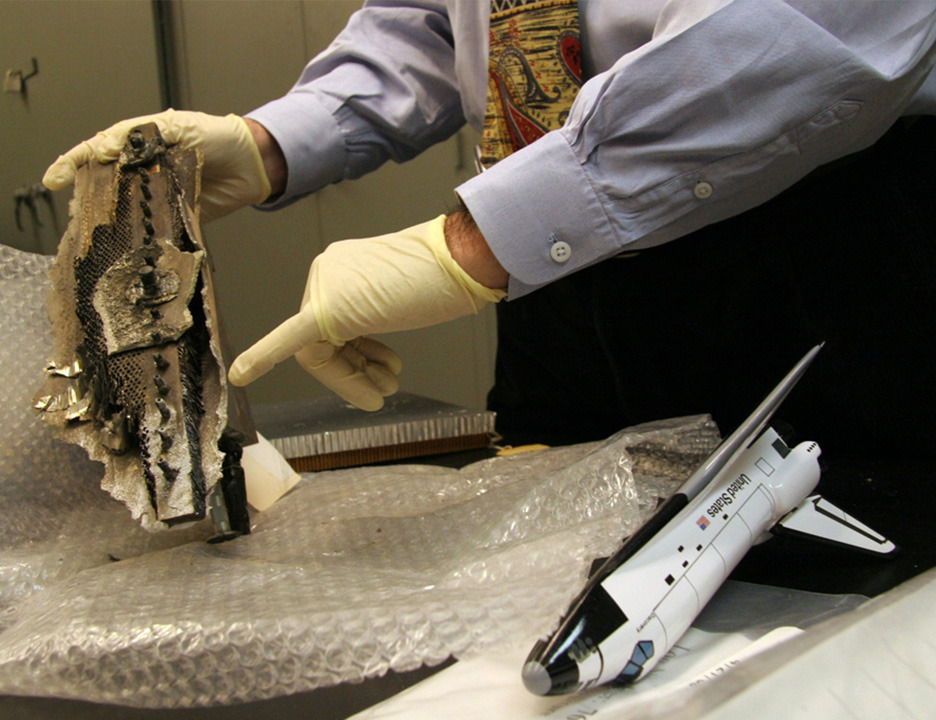
2005 — NASA goes Nano
Lehigh and NASA sign an agreement granting NASA access to the Center for Advanced Materials and Nanotechnology, supporting collaborative research on nanoscale materials and devices, including those used in the James Webb Space Telescope’s microshutter system.
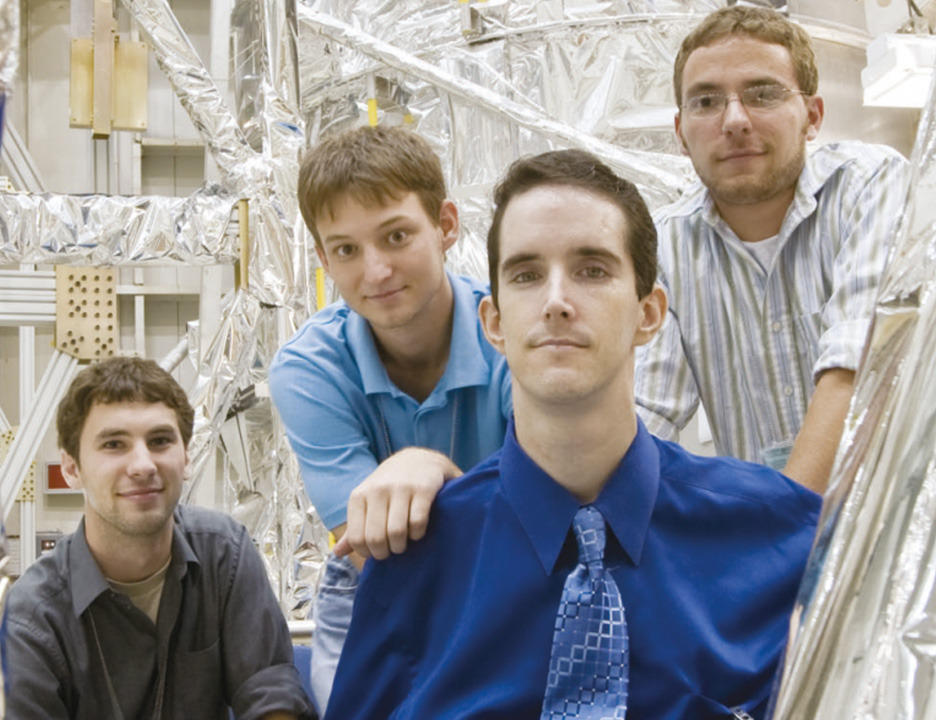
2008 — Navigating the Planetary Hoppers
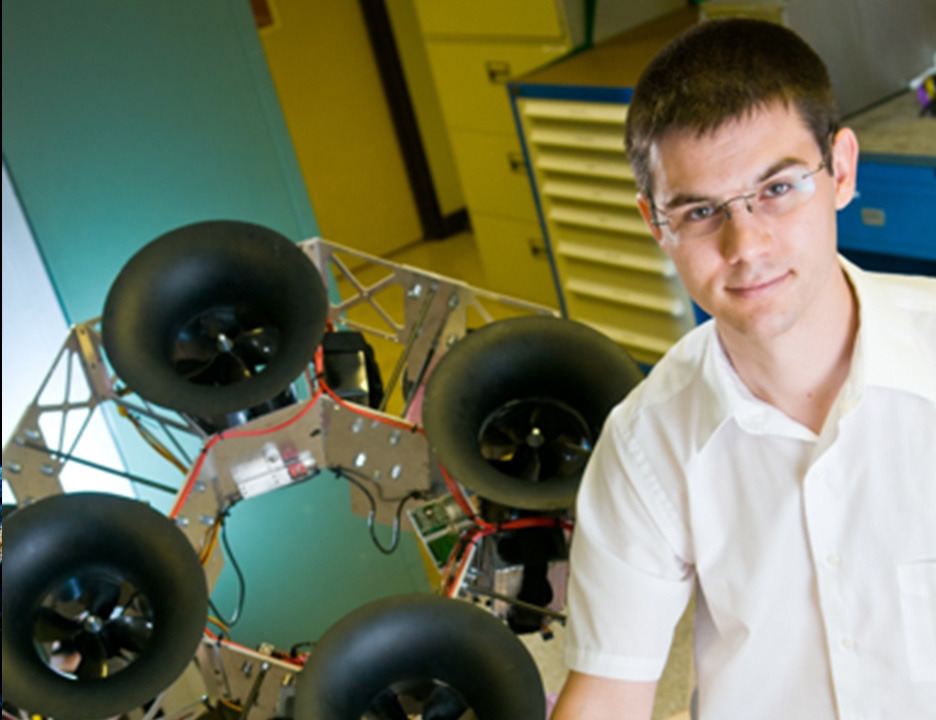
A team of Lehigh engineering students successfully flight-tests a Lunar Hopper Simulator. Using a custom-built quadrotor platform, they develop autonomous control algorithms to address soft-landing maneuvers on low-gravity surfaces such as moons or asteroids.

2009 — X-Raying the Sea of Tranquility
Commemorating the 40th anniversary of the Moon landing, materials scientists Carol and Christopher Kiely used a revolutionary technique called X-ray ultramicroscopy (XuM) to analyze the original Apollo 11 lunar samples. This non-invasive "time capsule" research allowed the team to examine the internal structure of the 3.5-billion-year-old particles without damaging them.
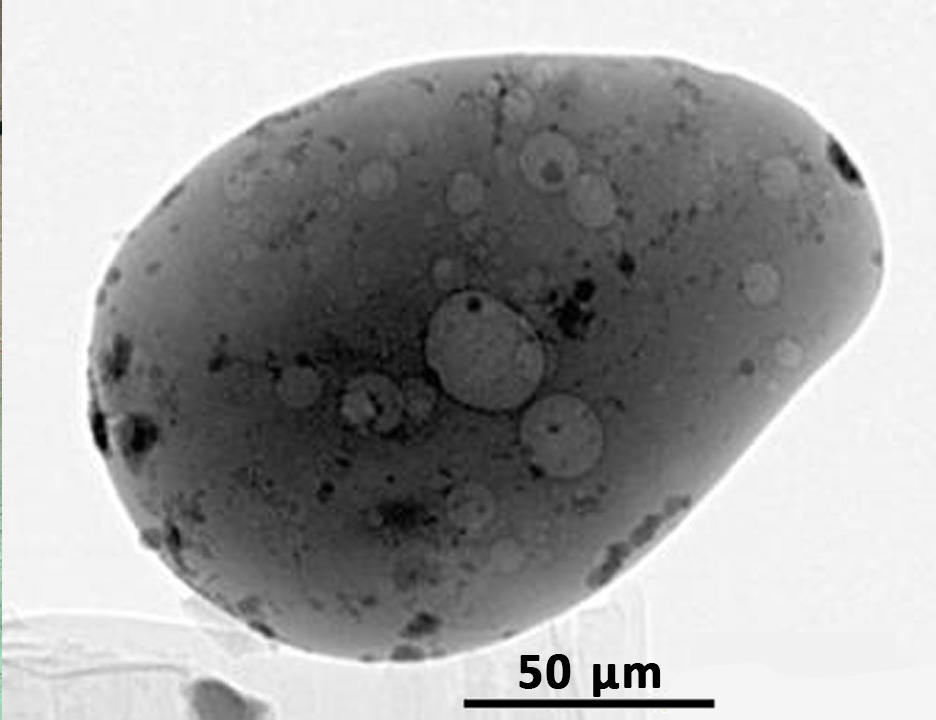
2010 — Integrative Materials Joining
Professor John DuPont directs a collaborative research center involving NASA and national laboratories, developing materials joining technologies for aerospace and energy applications.
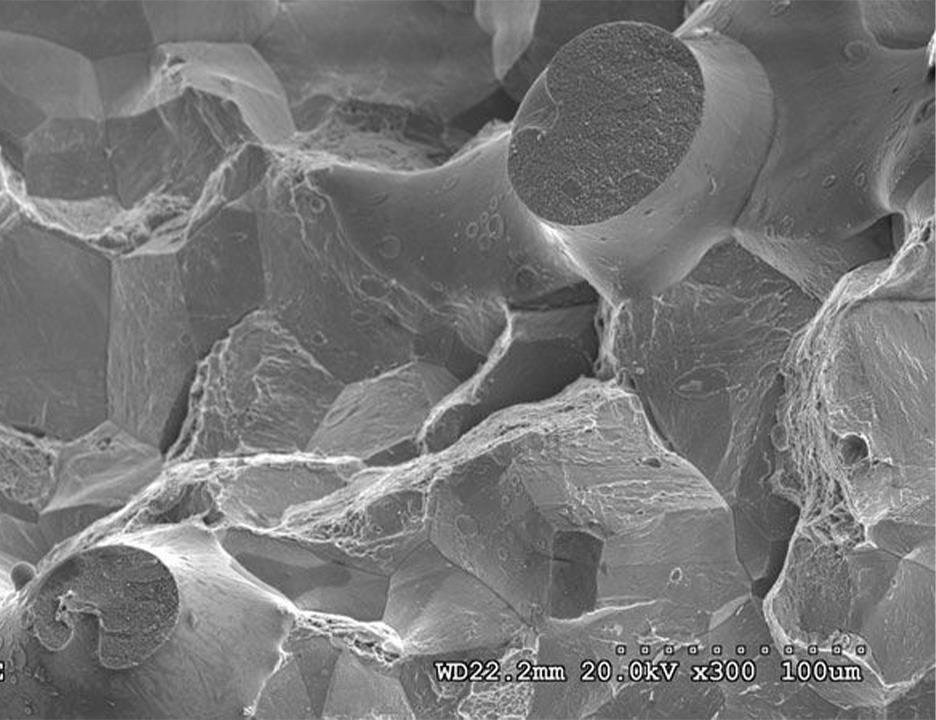
2011 — Charting the Lagrange Highways
Doctoral candidate Andrew Abraham applies evolutionary algorithms to Earth–Moon Lagrange point orbits, developing methods for satellites to "park" in stable positions between the Earth and Moon.
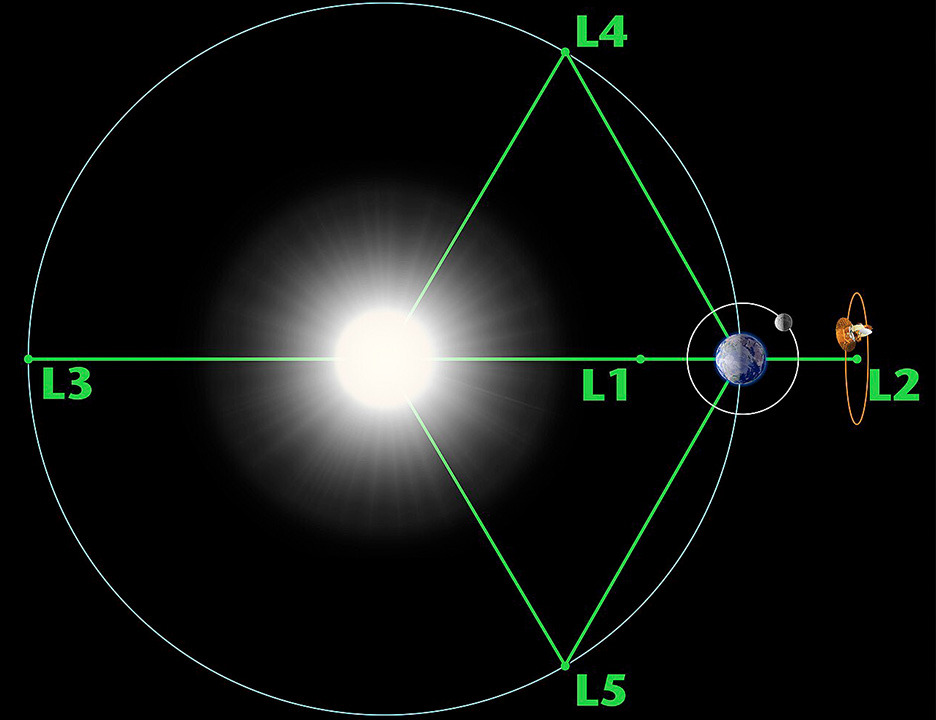
2015 — Harvesting the Red Planet
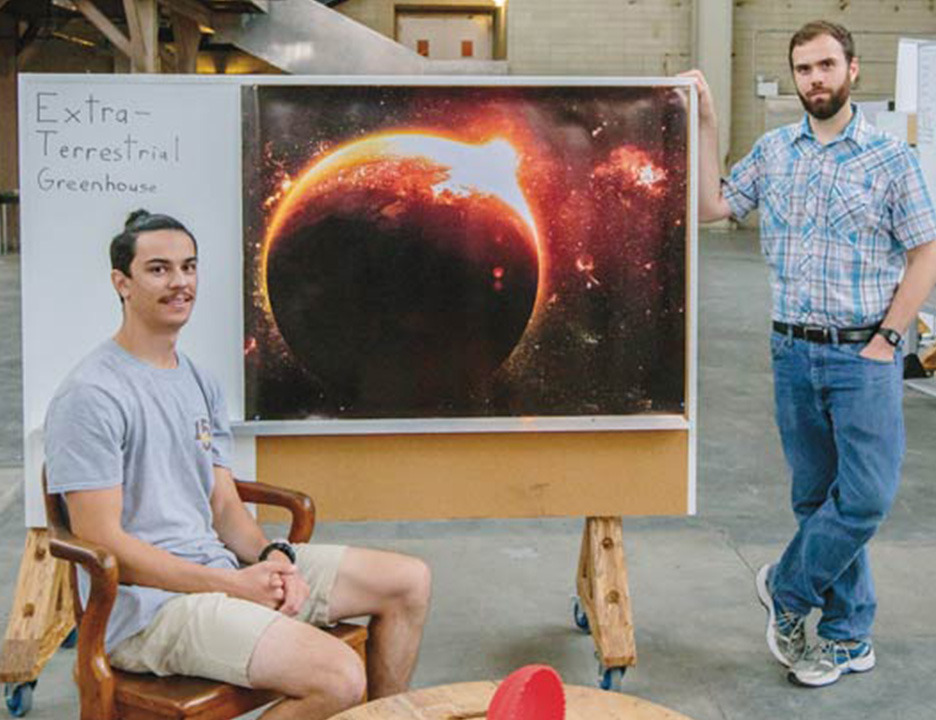
As part of a Mountaintop project, Lehigh students design and test greenhouse concepts for sustaining future travelers to Mars, evaluating inflatable versus rigid structures and performing mechanical tests on candidate materials.
2015 — A Plutonian Flyby
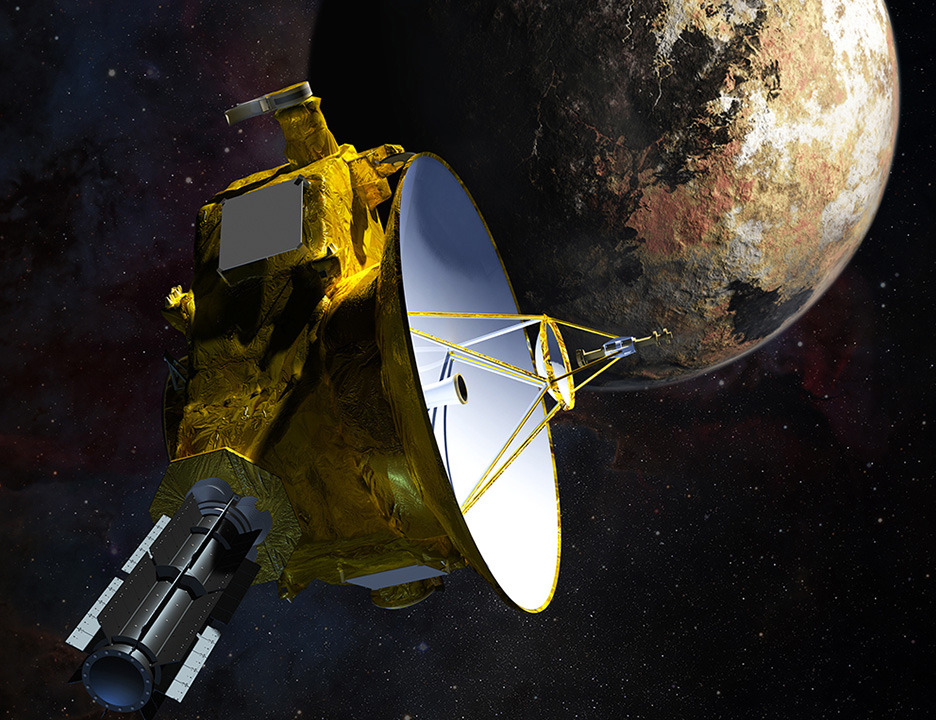
Planetary scientist Tracy Becker ’10 analyzes data from the Alice ultraviolet spectrograph during the New Horizons flyby of Pluto, helping characterize the composition of the dwarf planet’s atmosphere and surface.
2016 — Searching for Exoplanets
Professor Josh Pepper (College of Arts and Sciences) helps lead the KELT (Kilodegree Extremely Little Telescope) survey, which discovers KELT-11b—an extremely low-density “puffy” exoplanet—and contributes to the study of Kepler-1647b, a giant planet orbiting two stars.
2017 — LUSI Enters the Chat
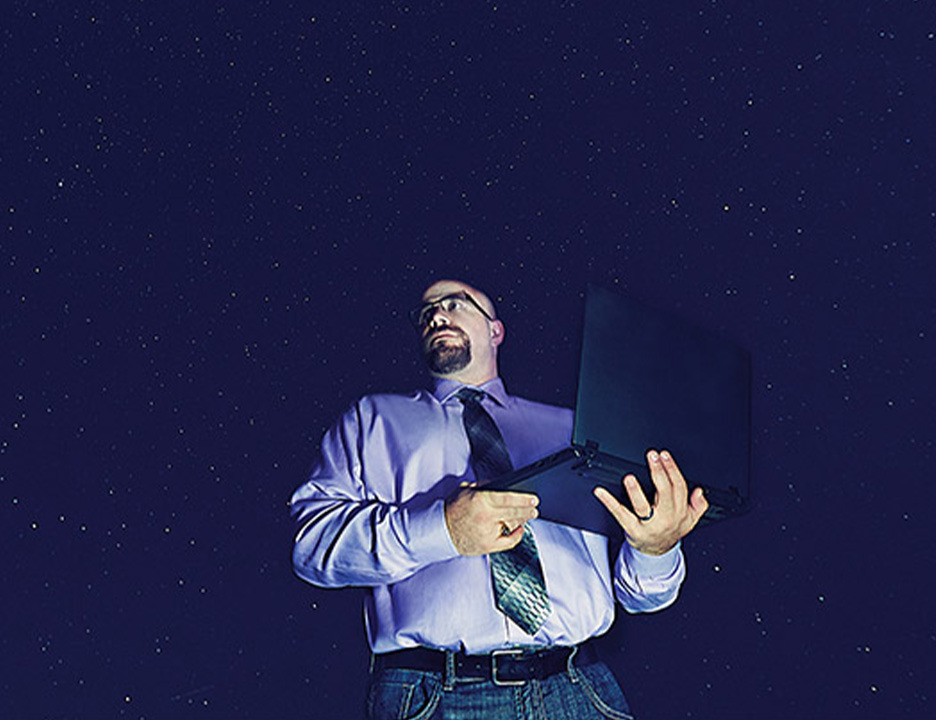
Students Danny Shmalo ’18 and Huy Tu ’18 found the Lehigh University Space Initiative (LUSI), unifying student aerospace projects and launching work toward Lehigh’s first nanosatellite—while preparing students for aerospace careers with organizations such as NASA, SpaceX, and Blue Origin.
2021 — James Webb Space Telescope
Scott Willoughby ’89 leads the interdisciplinary Northrop Grumman program team that designed, built, tested, and deployed the James Webb Space Telescope. The JWST's advanced instrumentation—including NIRSpec’s microshutter array—draws on earlier materials and nanotechnology research conducted at Lehigh.
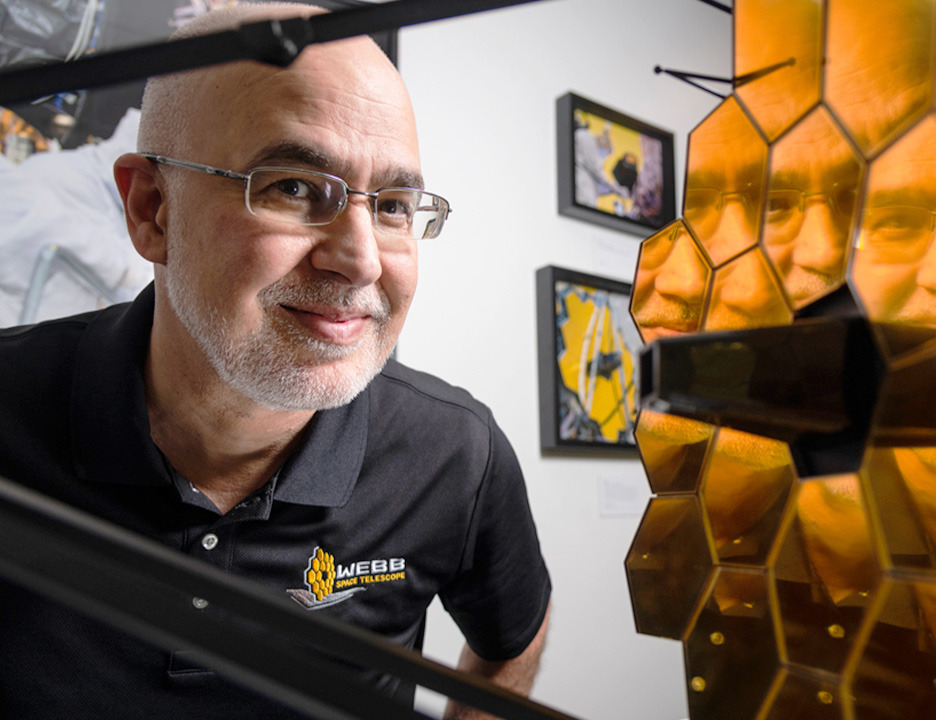
2022 — Lightweight Alloys, Serious Impact
Led by Professor Martin Harmer, a five-year, $25 million cooperative agreement unites the U.S. Army Research Laboratory and Lehigh, Ohio State, and Louisiana State universities to develop high-entropy alloys for demanding aerospace applications.
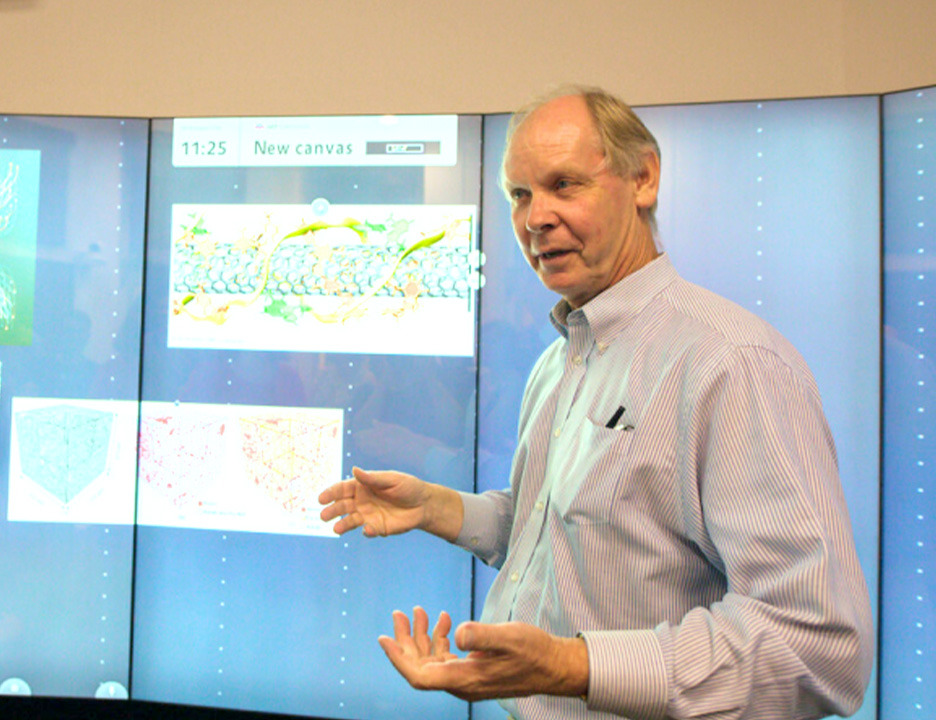
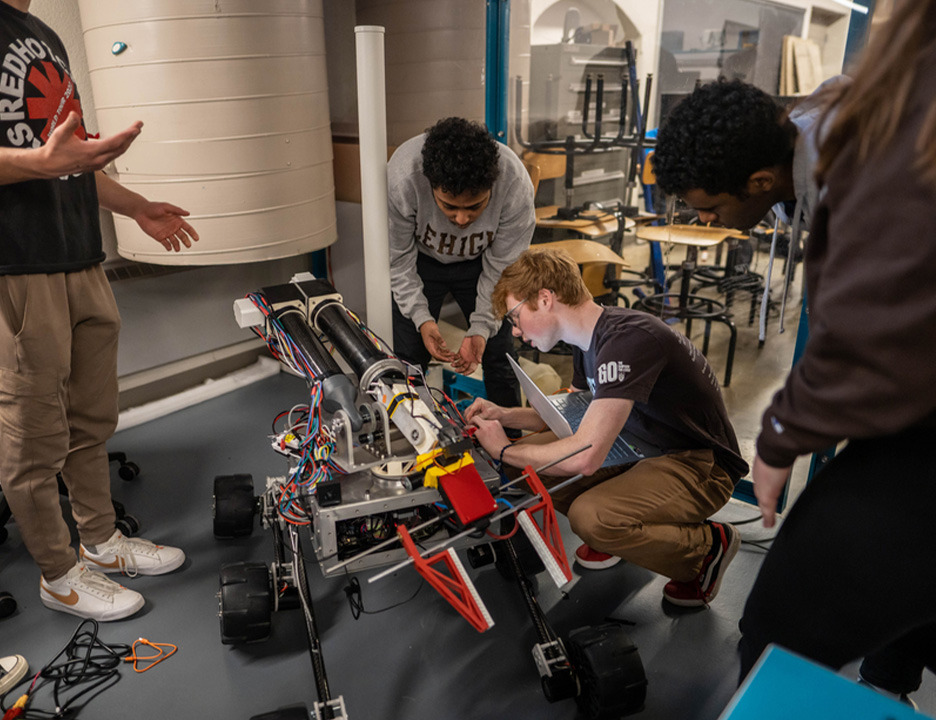
2023 — LUSI Marks Milestone
The Lehigh University Space Initiative (LUSI) enters its first custom-built rover into the University Rover Challenge. Competing at the Mars Desert Research Station in Utah, the student team fields a remotely operated vehicle designed with autonomous navigation and in situ soil analysis capabilities.
2024 — Architect of Sustainable Flight
Jill Seebergh '89 is elected to the National Academy of Engineering (NAE), an elite distinction in the field. As a Principal Senior Technical Fellow at Boeing, she leads development of environmentally responsible chemical materials for aerospace applications.

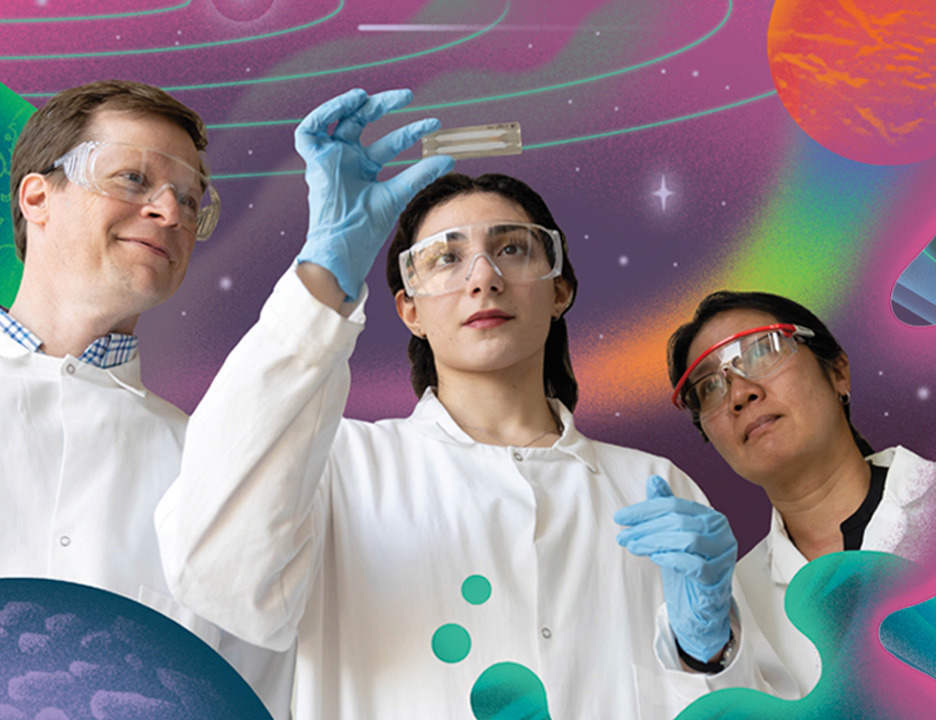
2024 — Science in Microgravity
An NSF-supported experiment, led by professors James Gilchrist (left), Kelly Schultz (not pictured), and Xuanhong Cheng (right), catches a ride on a Cygnus spacecraft to the International Space Station to study thermophoresis—the movement of particles triggered by temperature gradients—without the interference of Earth's gravity.
2025 — Reaching New Heights
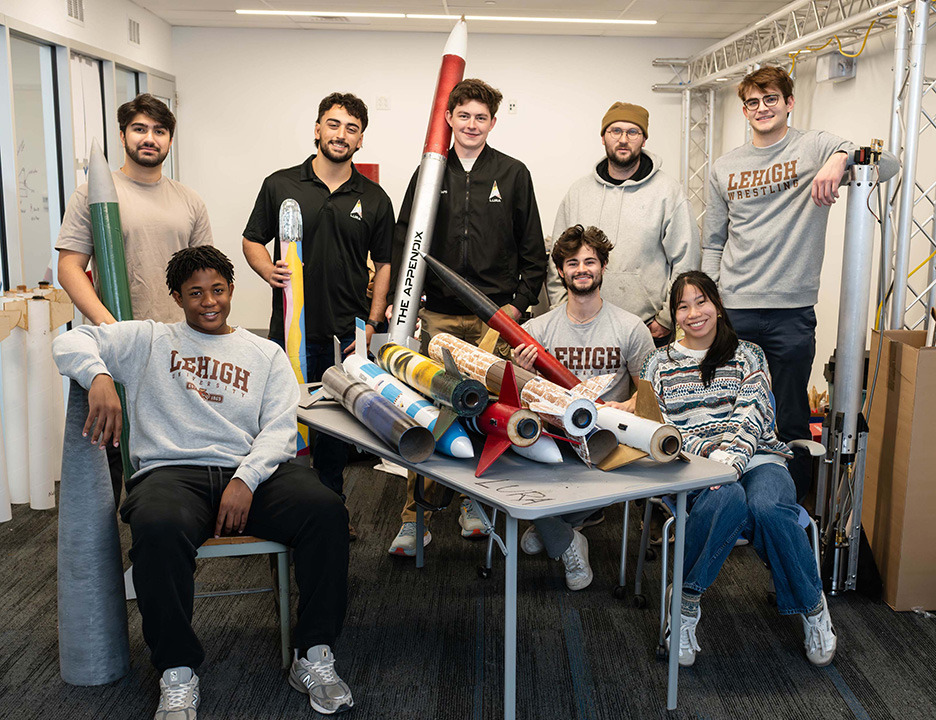
The Lehigh University Rocketry Association (LURA), which was founded in 2022, completes a Level 2 high-powered rocket flight, earning certification from the National Association of Rocketry and marking a major milestone in student rocketry and aerospace engineering at Lehigh.
2025 — Thriving While Detonating
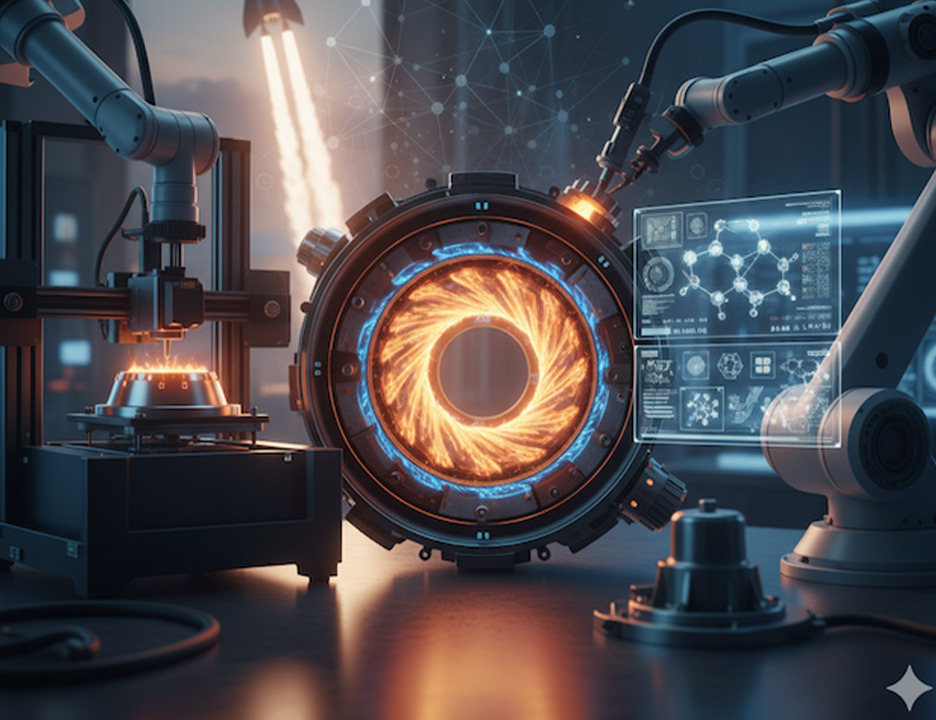
Professor Natasha Vermaak leads a multidisciplinary team awarded a $2 million NSF grant to investigate materials for Rotating Detonation Engines (RDEs), which generate power through continuous supersonic detonations to achieve higher thrust and efficiency for applications including satellite launches.
2025 — Master's in Aerospace and Space Systems Engineering
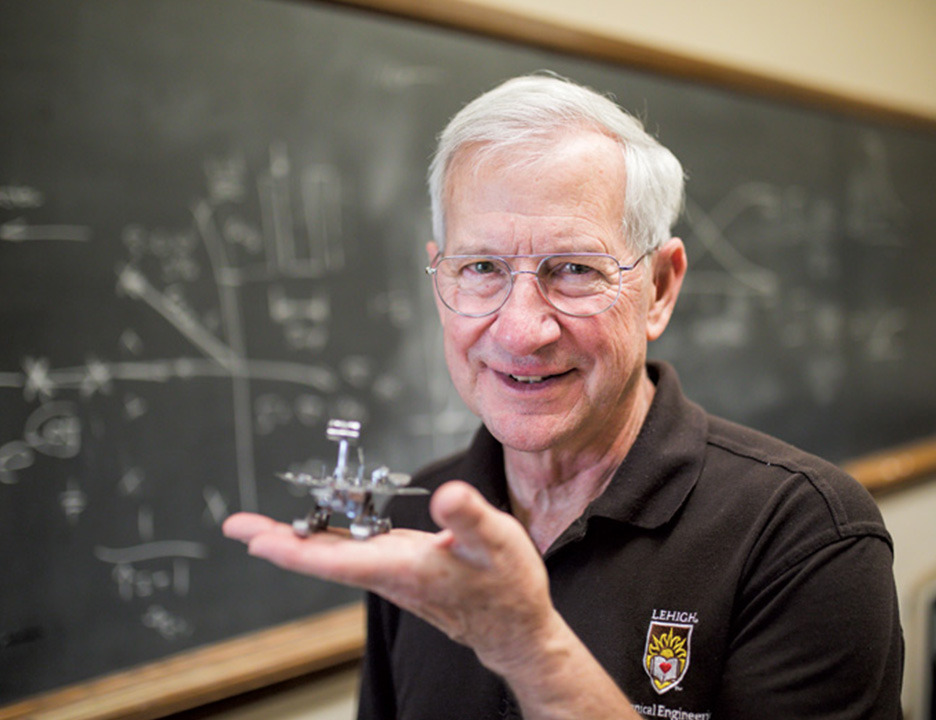
Lehigh launches a new in-person and online graduate program to train systems thinkers for the emerging space economy. Professor and alumnus Terry Hart ’68—a former astronaut, fighter pilot, and satellite business executive—serves as founding director.
Timeline reporting by Mary Ellen Alu.
Photography courtesy of Lehigh University Special Collections, John McGillen, NASA, Christa Neu, Stephanie Veto.
Photo illustration by Christa Neu and Ariel Davis.